Short Answer
The useful way to think about Crimson Desert’s map is not only size. Pywel is built around regions, vertical routes, camps, ruins, and return paths, so your route plan matters more than the raw distance between markers.
This page should be used as a clean route note rather than a lore dump. Crimson Desert is at its best when the guide tells you what to do next, what to prepare, and what to check before leaving the area.
Route Priorities
- Confirm the objective and nearest safe camp.
- Clear enemies before interacting with puzzle or quest objects.
- Watch for a follow-up marker after dialogue or a key interaction.
- Before leaving, check for a side pickup, shortcut, or newly opened conversation.
Player Note
If this guide is being used during a first playthrough, stay spoiler-light. Read the short answer, follow the checklist, and only open the boss or build page if the route starts pushing back.
Where to Go Next
- All Chapters Guide for the main route order.
- Quest Index for side objectives and puzzle pages.
- Boss Index for encounter preparation.
- Build Index for weapons, armor, tools, and camp systems.
FAQ
Should I read this before reaching the objective?
Read the short answer first. Save the detailed notes for when you are near the route, fight, item, or store page in question.
What should be added before publishing?
For a final version, add one confirmed screenshot, the exact chapter or location, and any reward names that can be verified in-game.
Further Reading
How I Would Use the Map
For Crimson Desert Map Size Explained: Regions, Routes, and Search Tips, I would think in routes rather than empty scale. Pywel is useful to players when it is broken into decisions: which camp starts the route, which landmark keeps you oriented, which climb or bridge saves time, and which optional stop is worth doing before the story pulls you away.
A raw map-size number does not tell you whether a quest is annoying. The path does. A marker across the valley can be quick if there is a bridge, or slow if the route has to curl through cliffs, enemy camps, and a cave exit.
Good Map Notes Include
- The nearest camp or settlement.
- The approach landmark players can recognize without opening the map.
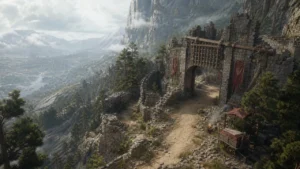
- Any vertical travel: cliffs, skybridge nodes, towers, caves, or broken walls.
- The return route after the objective is finished.
That is the difference between a pretty map and a useful one.
What Makes Pywel Feel Large
Pywel feels large because travel is not flat. A marker that looks close can sit above a cliff, behind a sealed gate, across a bridge, or inside a cave system that loops back on itself. That is why map-size discussions should include verticality, camps, return paths, and enemy density. The question is not only how far away the objective is. The question is how cleanly you can reach it and whether the return route stays open.
When I plan a route, I look for three anchors: the nearest safe camp, the landmark I can recognize from the ground, and the shortcut I can use after the objective is done. If a map page gives me those three things, it is useful even without a perfect coordinate grid.
Community Pulse
Public community discussion is a good reminder that players do not search for guides in a vacuum. They search because something slowed them down: a vague marker, a confusing route, a performance issue, a mount expectation, or a fight that suddenly feels unfair. That is why this page should stay practical and direct.
When this draft gets its final pass, the strongest addition would be one verified screenshot and one player-tested note: where the route begins, what usually goes wrong, and how to recover without wasting a full trip across Pywel.