Patch-Sensitive Boss Practice
Before repeating a boss, check whether a recent patch changed rematches, Oongka/Damiane skills, controls, mounts, or known combat issues. Patch 1.07 expanded rematches, Patch 1.09 added Oongka/Damiane skill changes, and the Known Issues tracker covers several progression and combat-adjacent bugs.
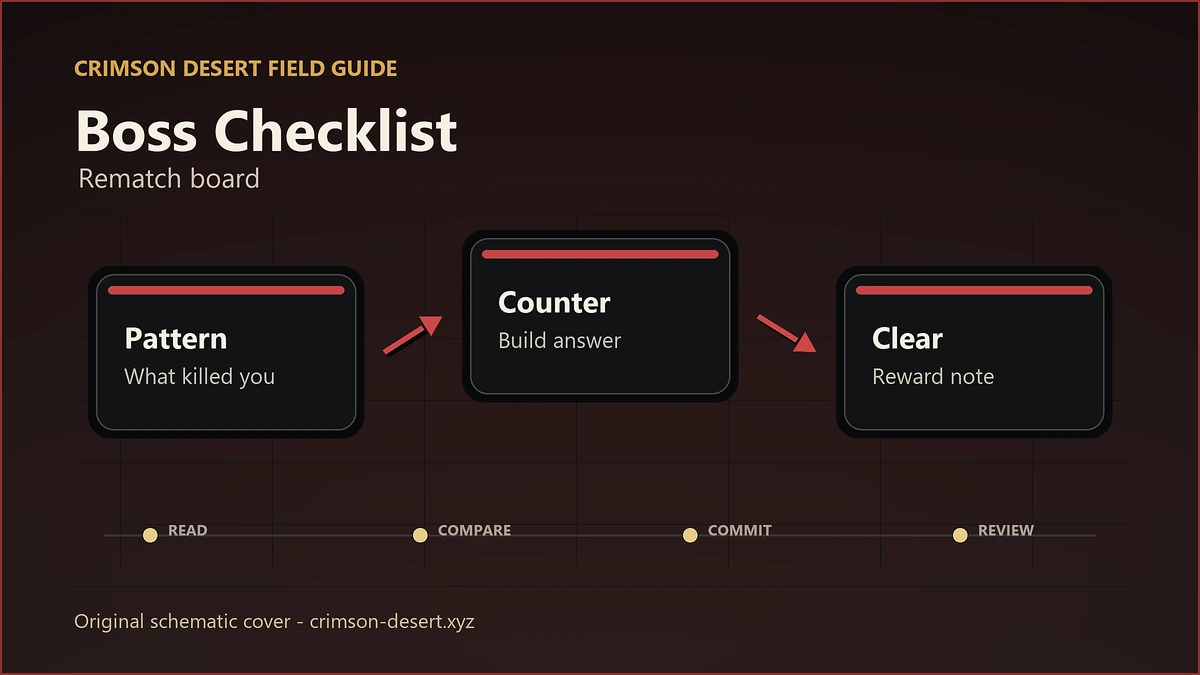
Use this board after a failed attempt. The point is not to grind blindly. Pick the boss, identify the mechanic that killed you, mark one build adjustment, then return with a cleaner plan.
14 bosses shown
Kailok the Hornsplitter
Trigger: Appears during the Golden Greed pressure route after the cattle and Shakatu clues begin pointing toward a heavier threat.
Boss read: Heavy horn charges, long recovery swings, and punishes against players who attack before the full animation ends.
Counter plan: Stay outside the first rush, punish the shoulder or horn recovery, and use stagger tools only after a missed charge.
Reward or clue: Boss clear confidence, route momentum, and stronger evidence for the Chapter 2 conflict chain.
Reed Devil
Trigger: Tied to the Howling Hill route, usually after the player has already been trained to watch terrain and approach angles.
Boss read: Fast pressure from awkward sight lines, short pauses, and sudden re-engagements that punish panic rolling.
Counter plan: Fight with the camera pulled back, clear nearby clutter first, and force the boss to cross open ground before committing.
Reward or clue: Hill-route clarity and a cleaner understanding of ambush-style enemies.
Lava Myurdin
Trigger: Covered in the mid-to-late route where environmental pressure starts to matter as much as raw boss damage.
Boss read: Area denial, delayed danger zones, and punishes against players who stand still after a safe-looking dodge.
Counter plan: Move in arcs rather than straight lines, save stamina for the second hazard, and punish only after the floor is safe.
Reward or clue: Route unlock clues and a strong lesson in reading hazard timing before attacking.
Goyen
Trigger: Appears in the political and ceremonial pressure arc, where single-target discipline becomes more important.
Boss read: Measured melee exchanges, baited openings, and counters that punish greedy two-hit strings.
Counter plan: Treat the first opening as a test. Land one clean hit, reset, then extend only after confirming the recovery window.
Reward or clue: Story momentum and a sharper read on duel-style bosses.
Black Witch
Trigger: Linked to late-route mystery beats where ranged pressure, visual tells, and patience become the main test.
Boss read: Projectile pressure, delayed casts, and baited retreats that pull players into bad spacing.
Counter plan: Close distance after the cast commits, keep one escape route open, and avoid chasing through a second spell lane.
Reward or clue: Lore clues, route confidence, and stronger answers for ranged pressure fights.
Golden Star
Trigger: A late-route elite encounter that works best after the player has cleaned up build and weapon comfort.
Boss read: Short burst windows, high punishment, and phase shifts that reward calm damage planning.
Counter plan: Enter with a planned burst answer, spend resources only when the phase is exposed, and reset after every major trade.
Reward or clue: Late-game route clues and a strong damage-check rehearsal before the final stretch.
Kearush the Slayer
Trigger: Fits the counterattack arc, where the route asks the player to survive heavier enemy momentum.
Boss read: Aggressive chains, guard pressure, and punish attempts after blocked or partial hits.
Counter plan: Do not try to win every exchange. Block, step out, and answer only when the chain truly ends.
Reward or clue: Combat discipline and a clear benchmark for defensive builds.
Cassius Morten, the Traitor
Trigger: Presented as a betrayal-style route beat where the fight is as much about restraint as damage.
Boss read: Feints, discipline checks, and sudden punishment when the player attacks out of frustration.
Counter plan: Watch the hands and shoulders, not only the weapon. Delay your punish until the feint is no longer active.
Reward or clue: Story clarification and a cleaner path into the late-game conflict.
Ludvig
Trigger: Set up around the Homecoming route and the unresolved personal conflict that follows it.
Boss read: Phase-driven pacing, emotional story pressure, and attacks that become easier after the opening pattern is understood.
Counter plan: Use the first attempt to learn phase boundaries. Save healing and burst for the part of the fight that changes.
Reward or clue: Major story clues and a route handoff into later chapter stakes.
Corrupted Caliburn
Trigger: A late-game corruption encounter that should be approached after revisiting weapon comfort and support planning.
Boss read: Unstable timing, corruption bursts, and attacks that look safe until the delayed follow-up lands.
Counter plan: Respect every delayed hit. Roll or block the follow-up before trying to take the punish window.
Reward or clue: Reality-shift clues and stronger preparation for the final route.
Umbra
Trigger: Final-route pressure in The Abyss, best handled after finishing build cleanup and boss review notes.
Boss read: Long-form endurance pressure, layered tells, and punishment for players who spend resources too early.
Counter plan: Plan the fight in segments. Preserve healing early, keep the camera stable, and use burst only on confirmed exposure.
Reward or clue: Final-route resolution and endgame cleanup direction.
Master Du
Trigger: Works as an arena-style lesson during the knowledge and discipline portion of the route.
Boss read: Clean punish windows, timing lessons, and pressure that exposes sloppy button rhythm.
Counter plan: Slow down. One correct punish teaches more than three rushed hits.
Reward or clue: Technique knowledge and a practical benchmark for arena pressure.
Clockwork Mantis
Trigger: A mechanical-pattern encounter where repeated movement tells are more useful than raw reaction speed.
Boss read: Sharp lunges, angular recoveries, and misleading pauses after partial movement.
Counter plan: Keep diagonal spacing, avoid the front line after each lunge, and punish the turn rather than the first stop.
Reward or clue: Pattern-reading confidence and better preparation for less human enemy movement.
Crowcaller
Trigger: A pressure encounter that tests whether the player can control the arena before chasing the boss.
Boss read: Adds, ranged harassment, and tempo breaks that turn a clean duel into a messy fight.
Counter plan: Clear the small threats quickly, reposition before attacking the boss, and avoid being pulled into the edge of the arena.
Reward or clue: Cleaner route control and a good lesson in target priority.
Rematch Method
1. Name the mistake
Before changing gear, write down the exact attack, phase, or spacing error that ended the attempt.
2. Change one answer
Adjust one variable: weapon reach, stagger option, armor comfort, or healing plan. Do not rebuild everything at once.
3. Retry with a rule
Enter the rematch with one rule, such as wait for the second swing or punish only after the cast finishes.
Useful Cross-Checks
- Use Weapon Compare when a boss feels too fast, too armored, or too hard to reach.
- Use Build Planner when repeated attempts show the same weakness in your setup.
- Use Chapter Progress Tracker to see where the boss sits in the full route.